
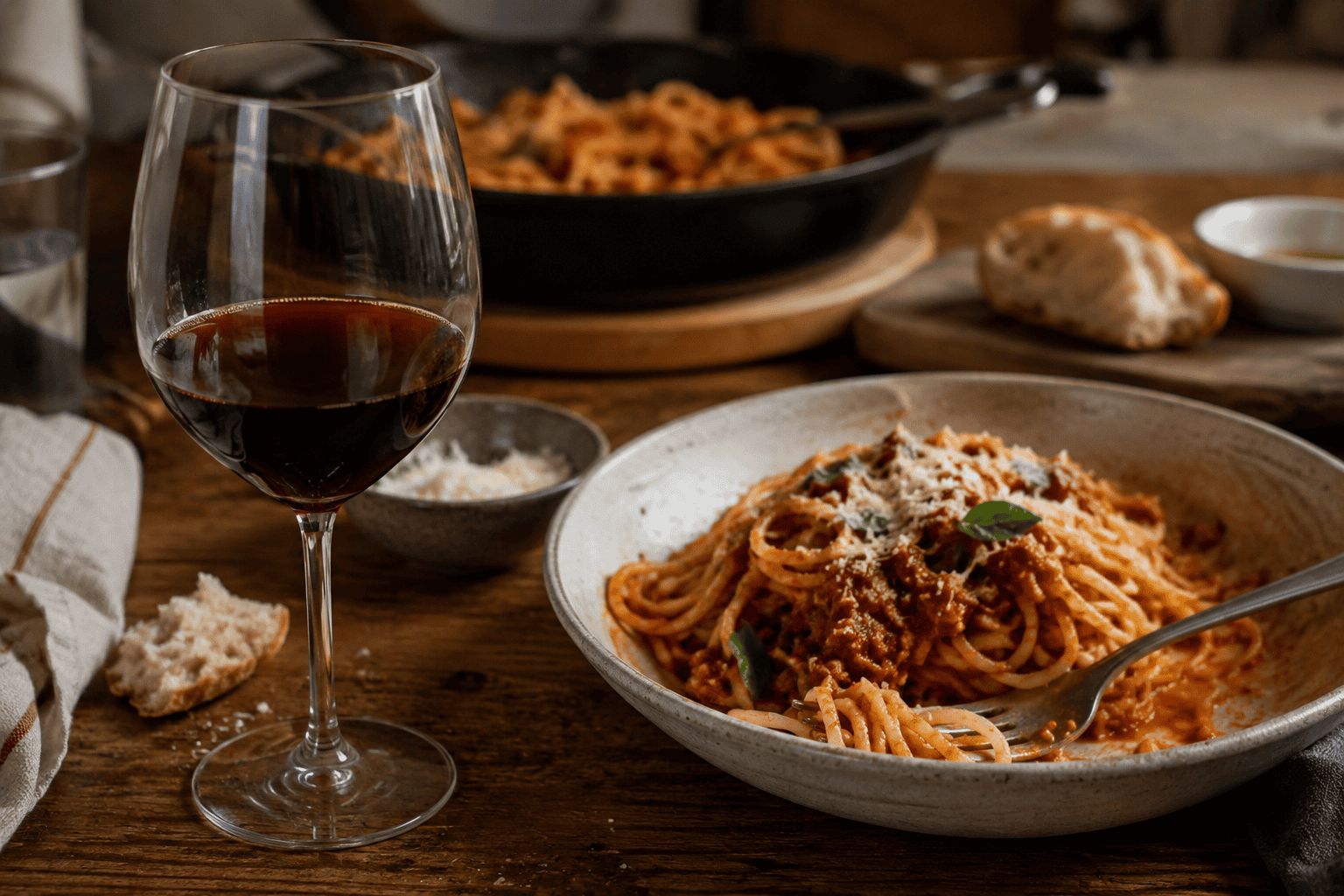
A wine that feels sharp, bitter, thin, or overly alcoholic on its own can become surprisingly balanced once dinner hits the table. People notice this all the time, especially with wines that seem far more enjoyable alongside a meal than they did during the first sip. There are real sensory reasons why some wines taste better with food, and most of them have to do with how acidity, tannin, salt, fat, and texture interact on the palate.
That shift is not just psychological, and it is not necessarily a sign that the wine “opened up.” In many cases, the food is actively changing the way the wine is perceived.
Wine is an unusually reactive beverage. Acidity, tannin, alcohol, sweetness, bitterness, aroma, temperature, and texture all interact with what you are eating in real time. The same wine can taste dramatically different depending on whether it is paired with salty fries, roast chicken, spicy noodles, creamy pasta, or nothing at all.
Some wines are also built with food in mind from the beginning. This is especially true in many traditional wine regions where wine developed as part of daily meals rather than as a standalone tasting experience. A wine that seems restrained or severe on its own may start making perfect sense once food enters the picture.
One of the clearest examples involves tannins, the compounds responsible for the drying sensation common in many red wines.
Tannins come primarily from grape skins, seeds, and oak aging. They are especially noticeable in wines like Cabernet Sauvignon, Nebbiolo, Syrah, and many Bordeaux blends. When people describe a wine as “grippy” or “astringent,” they are usually talking about tannins.
That dry feeling is partly the result of tannins binding to proteins in your saliva. Saliva normally coats and lubricates the mouth, so when tannins interfere with that process, the texture of the wine can feel rougher or more aggressive.
Food changes the interaction. Protein and fat provide tannins with something else to bind to, which softens the drying sensation and changes the texture of the wine. A young Cabernet that felt severe on its own can suddenly seem smoother and more integrated once there is steak, lamb, or even a cheeseburger involved. This is one reason some red wines can feel incomplete without food. In many traditional wine regions, wines evolved alongside local cuisines over centuries. The structure of the wine was never meant to exist in isolation for long stretches of analytical sipping. It was meant to move through a meal.
Acidity in wine behaves differently, though it can be just as dramatic.
A high-acid wine stimulates salivation, which is part of why words like “crisp” and “mouthwatering” show up so often in wine descriptions. That extra salivation refreshes the palate after rich or fatty foods and keeps meals from feeling heavy over time.
This is why acidic wines often shine with creamy sauces, fried foods, cheese, or seafood cooked with butter. The wine cuts through richness and keeps each bite from lingering too heavily on the palate.
Without food, though, that same acidity can sometimes feel sharp or austere. Certain Italian whites and reds are good examples of this. Wines from places like Piedmont, Chianti, or Etna are often built around acidity because they developed in cultures where wine and food were rarely separated. Tasted on their own, some can seem lean or severe at first. With pasta, roasted meat, olive oil, or aged cheese, the balance shifts completely. People sometimes assume this means the wine has “opened up” over the course of dinner. Occasionally that is true, especially with older or tightly wound wines, but often the larger change is happening in your mouth rather than in the glass.
Some of the strongest food-and-wine interactions involve ingredients people do not always think about consciously.
Salt, for example, suppresses bitterness. That is part of why salty foods can make wines seem softer, fruitier, and more expressive. It also explains why sparkling wine and potato chips work far better together than they probably should.
Spicy food creates a different effect. Alcohol intensifies the sensation of heat, so wines with high alcohol levels can become noticeably harsher alongside spicy dishes. A bold red that feels smooth on its own may suddenly taste hot and unbalanced with Thai curry or Sichuan food.
This is one reason slightly off-dry Riesling pairs so naturally with spicy cuisines. The wine’s acidity keeps it refreshing, while the small amount of residual sugar softens the heat instead of amplifying it.
Sweet foods can shift perception too. A dry wine tasted beside dessert will often seem more bitter and acidic than it did moments earlier. The sugar in the food changes the frame of reference. None of these reactions require formal wine knowledge to notice. Most people recognize them instinctively once they start paying attention.
Wine pairing conversations often focus heavily on flavor, but texture and aroma are just as important.
Creamy foods interact differently with wine than crunchy or charred foods do. Sparkling wines feel especially refreshing with fried food partly because carbonation adds physical texture and contrast. Temperature matters too. Chilled wines emphasize acidity and freshness, while warmer temperatures make alcohol and texture feel more pronounced.
Aromas also become more noticeable during meals because heat and fat help release aromatic compounds from food. Wine and food are constantly influencing each other in both directions. A savory dish can pull hidden herbal or earthy notes out of a wine that barely registered before the first bite. This is part of why some wines seem more interesting over the course of dinner than they did during the first sip.
People sometimes approach wine pairing as though there must be a perfect answer for every dish. In reality, most successful pairings come down to understanding a few basic interactions.
Acid helps balance richness. Protein softens tannins. Salt suppresses bitterness. Alcohol amplifies spice.
Beyond that, there is plenty of room for personal preference.
The useful takeaway is not that every meal requires a carefully engineered pairing. It is simply that wine is not a fixed experience. A bottle can taste surprisingly different depending on what is happening around it.
Once you notice that, certain wines start making more sense at the table than they did during the first sip alone.