
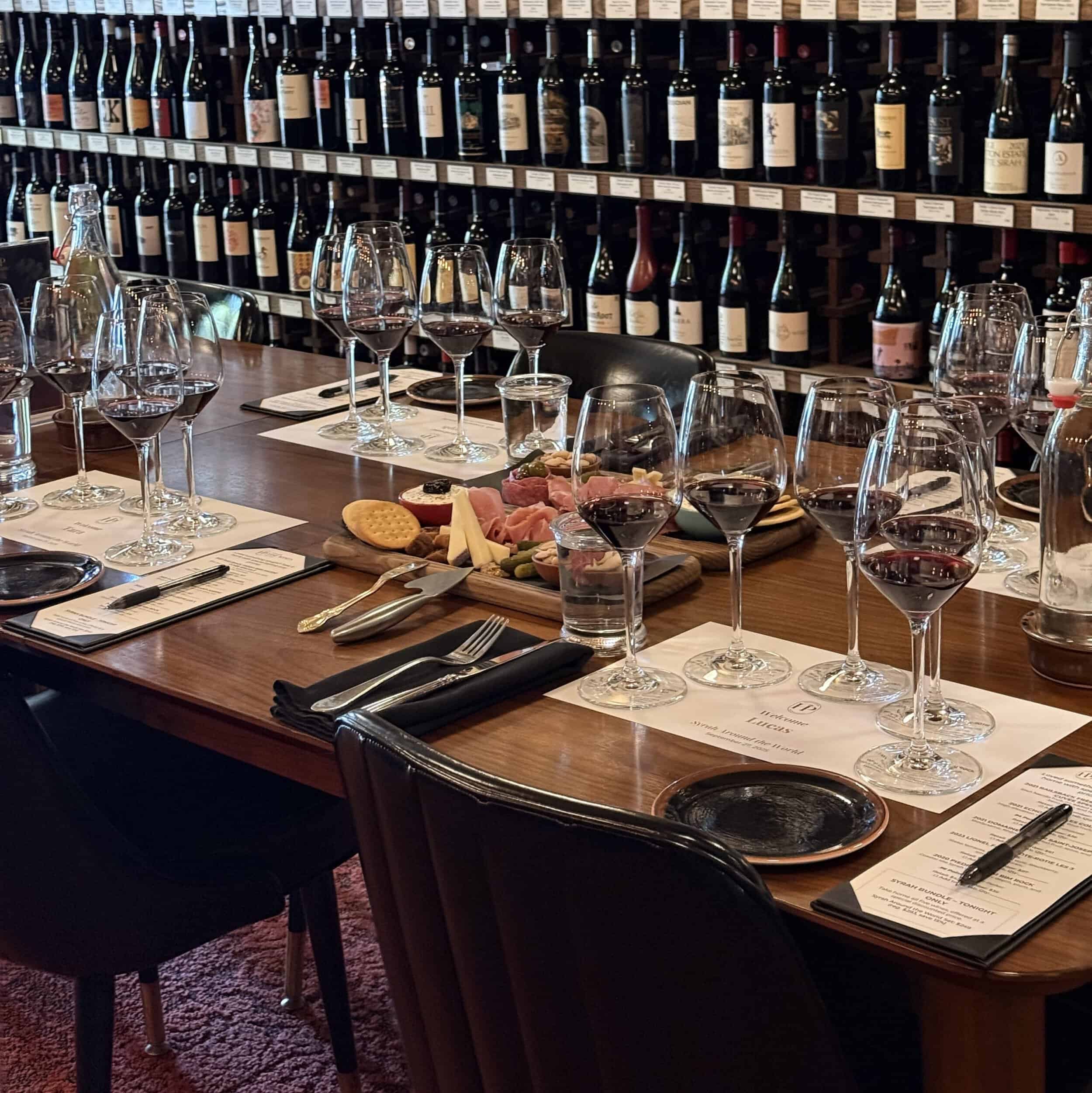
If you’re wondering what to expect at a wine tasting, it’s less about ordering a drink and more about moving through a set of wines with some intention behind it. The format is designed to show contrast and progression, not just to pour something that sounds good in the moment. Most tastings are built around a theme. That might be a single producer, a region, or a specific grape. The point is that the wines are connected in a way that makes the experience feel coherent rather than random. Even without any background knowledge, that structure gives the tasting a sense of direction.
Instead of choosing from a list, the lineup is already set. A typical tasting includes a flight of several wines, usually poured in smaller amounts than a standard glass. The size is intentional. It allows for comparison without turning the experience into a full round of drinks.
There’s usually a natural order to the wines. Lighter styles tend to come first, followed by wines with more weight or structure. That sequencing helps each one show clearly without overwhelming the next. Printed notes or a simple menu often accompany the tasting. These might include the producer, region, and a short description. They’re there as context, not as something to study. Most people glance at them, reference them occasionally, and then go back to the glass.
A tasting is usually guided, but that guidance is meant to be light. The host may introduce each wine, offer a bit of background, or point out something worth noticing. It’s less about instruction and more about framing the experience.
The most useful tastings strike a balance here. There’s enough information to make the wines feel grounded and specific, but not so much that it turns into a lecture. Questions are welcome, but not required. Some groups engage a lot, others mostly listen, and both approaches work.
Tastings tend to move more slowly than a typical night out. The structure encourages a bit of attention, even if it’s casual. Wines are revisited, compared, and sometimes set aside.
Not every pour will land. That’s part of the point. A tasting is one of the few settings where it’s normal to try something, decide it’s not for you, and move on without finishing it. The experience is built around exposure rather than completion.
Because the pours are smaller and spread out, the overall rhythm stays controlled. It’s not about drinking quickly or maximizing value. It’s about seeing how different wines show up side by side.
There’s a tendency to overthink what should be coming across in the glass. In practice, most people pick up on a few simple things: flavor, texture, and overall impression.
Some wines feel lighter, others more substantial. Some are crisp, others softer or richer. Certain flavors stand out more clearly than others. That level of observation is enough to start forming preferences.
Technical language isn’t required. If a wine reminds someone of a specific fruit, dish, or smell, that’s useful. If it doesn’t, the broader impression still counts. Over time, those impressions add up into a clearer sense of what feels appealing and what doesn’t.
Even with structure, tastings are still social. People talk, compare notes, and react in real time. It’s common for two people to have completely different takes on the same wine, which tends to make the experience more interesting rather than less.
Some tables stay focused on the wines themselves. Others drift into conversation with the tasting as a backdrop. The format supports both without forcing either.
Some tastings include food, though it’s usually supplemental rather than a full meal. Small plates or simple pairings are often used to show how a wine interacts with something on the table.
When food isn’t part of the format, the wines are typically arranged to stand on their own. The progression from lighter to fuller styles helps create that sense of balance across the lineup.
If dinner is the goal, it’s worth planning for that separately. A tasting is better thought of as a focused experience rather than a replacement for a full meal.
Most tastings naturally lead into the option to purchase the wines that were poured. That’s part of the design, but it doesn’t feel forced. The experience gives a clear sense of what stands out, which makes the decision more straightforward.
Instead of relying on a label or a description, the reference point is already there. A wine that felt balanced, interesting, or just easy to enjoy during the tasting is usually the one people come back to. In that sense, the buying process becomes less about choosing correctly and more about recognizing something familiar.
There’s no expectation to buy, and many people don’t. But when a wine does resonate, the tasting removes most of the guesswork. It’s a more direct way to find something worth bringing home.
The main advantage of a tasting is the ability to try multiple wines in a single sitting, with enough context to understand what’s in the glass. That’s hard to replicate by ordering one bottle at a time.
It also creates a more reliable way to make decisions later. Preferences become clearer, not because they’ve been defined in advance, but because they’ve been experienced directly.
Wine can feel abstract when it’s reduced to descriptions or ratings. Tastings make it more concrete. Seeing several wines side by side, in a setting that’s designed for comparison, changes how people process what they’re drinking.
The result isn’t expertise so much as familiarity. The wines start to feel less like isolated experiences and more like part of a broader pattern. That shift is subtle, but it’s what makes tastings worth returning to.