
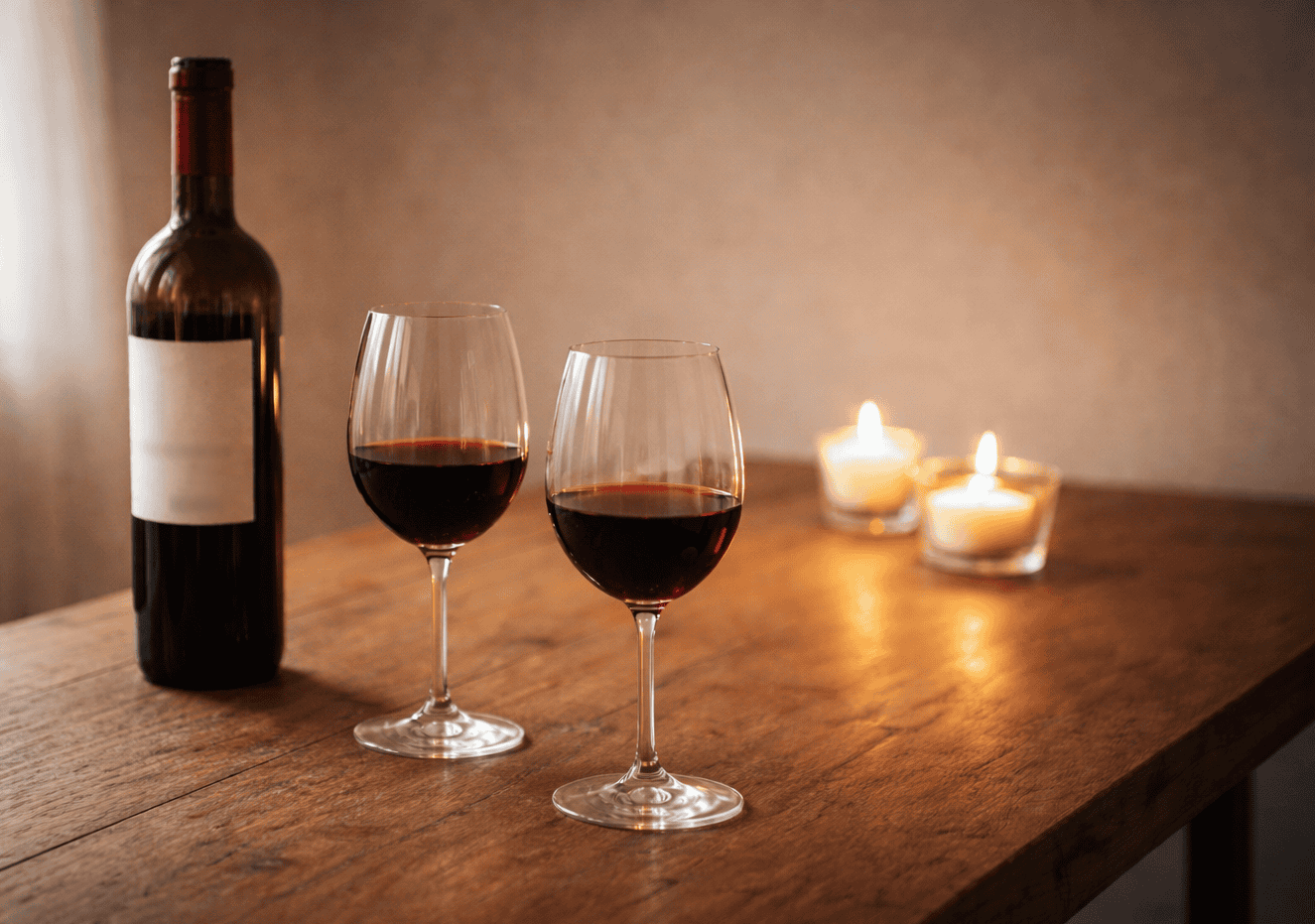
Valentine’s Day wine shopping can feel more loaded than it should. What’s usually a simple choice suddenly carries expectations about romance, effort, and taste. The good news is that choosing a Valentine’s Day wine doesn’t require insider knowledge or a dramatic bottle. It just requires thinking clearly about how the wine will be used and who it’s for.
Once those two things are settled, most of the noise falls away.
The first and most important question is whether the wine is meant to be enjoyed with food or on its own. This matters more than color, price, or reputation.
If the wine will be part of a meal, especially a home-cooked dinner, balance is key. Wines that work well with food tend to have moderate alcohol, good acidity, and restrained oak. Think along the lines of Pinot Noir, Grenache-based reds, Barbera, or Sangiovese on the red side, and wines like Chardonnay that isn’t heavily oaked, Chenin Blanc, Albariño, or dry Riesling on the white side. These styles tend to complement food rather than compete with it.
If the wine is meant for sipping before or after dinner, or alongside dessert, you can afford a little more personality. Sparkling wine, aromatic whites, or richer reds can work well here, as long as they still feel comfortable to drink without food doing the balancing.
Making this distinction early rules out a lot of wines that might sound impressive but feel awkward in the moment.
Valentine’s Day doesn’t come with a required wine style. What matters is what the person actually enjoys drinking.
If someone regularly drinks Cabernet Sauvignon or Malbec, choosing a red with structure and depth makes sense. If they gravitate toward Pinot Noir, Gamay, or lighter reds, sticking with that general weight will feel more natural than jumping to something much heavier. For white wine drinkers, pay attention to whether they prefer crisp, high-acid styles like Sauvignon Blanc and Pinot Grigio, or rounder, more textured wines like Chardonnay or white Rhône blends.
If you want the bottle to feel a little more intentional without going off-script, look for a variation within the same lane. A Cabernet drinker might enjoy a Bordeaux-style blend or a Cabernet from a cooler climate. Someone who likes Sauvignon Blanc might appreciate Albariño or Grüner Veltliner. These aren’t wild departures; they’re thoughtful extensions.
A wine feels special when there’s a reason behind it, even a simple one. That reason doesn’t need to involve rarity, hype, or a long explanation.
Sometimes it’s about place. Choosing a wine from a region you’ve visited, talked about, or enjoyed together gives the bottle context. Sometimes it’s about style — a wine you shared on an early date, or one tied to a specific memory. Even something as straightforward as “this felt like a good match for dinner” can be enough to frame the experience.
Price alone rarely creates this effect. A well-chosen wine at a moderate price point usually feels more thoughtful than an expensive bottle selected out of pressure.
There’s a persistent idea that Valentine’s Day calls for red wine, but that’s more tradition than truth.
Red wines can feel warm and grounding, especially with food, but very heavy reds can dominate an evening. If you’re leaning red, wines with moderate body and good acidity tend to be easier to live with over the course of a meal.
White wines are often overlooked for Valentine’s Day, but they can feel quietly elegant and intentional. They’re especially well suited to seafood, vegetable-forward dishes, or earlier plans, and they often keep the evening feeling lighter and more relaxed.
Sparkling wine naturally signals celebration, but it doesn’t have to feel formal or over-the-top. Dry sparkling wines can work throughout a meal or on their own, and they’re often more versatile than people expect.
There’s no rule that Valentine’s Day wine needs to be expensive. Enjoyment doesn’t reliably increase with price, especially if the wine doesn’t suit the drinker or the setting.
If you’re unsure where to land, look for wines described as balanced, food-friendly, or approachable. Be cautious with very high alcohol, heavy oak, or pronounced sweetness unless you know that’s what the person enjoys. Confidence in your choice usually matters more than stretching your budget.
Shopping locally can make this process easier, especially if you want context without pressure. For a broader look at how wine selection works in Boise, see our guide to what makes a great local wine shop.
If your Valentine’s plans involve enjoying wine out rather than bringing a bottle home, you can visit our wine bar to see how wines are presented, paired, and served in a relaxed setting.
For those who enjoy learning about wine gradually rather than treating it as a one-off decision, our Wine Club offers additional context and structure, though Valentine’s Day doesn’t require any long-term commitment to wine exploration.
Valentine’s Day wine doesn’t need to impress or perform. It doesn’t need to signal expertise or effort. It just needs to fit the evening it’s part of.
When a bottle reflects how the night will actually unfold and who will be there to drink it, it tends to feel special on its own — no theatrics required.